Accelerating the NEVERFLAT Pilot: Alba Iulia Municipality Visits BEIA GRID Institute
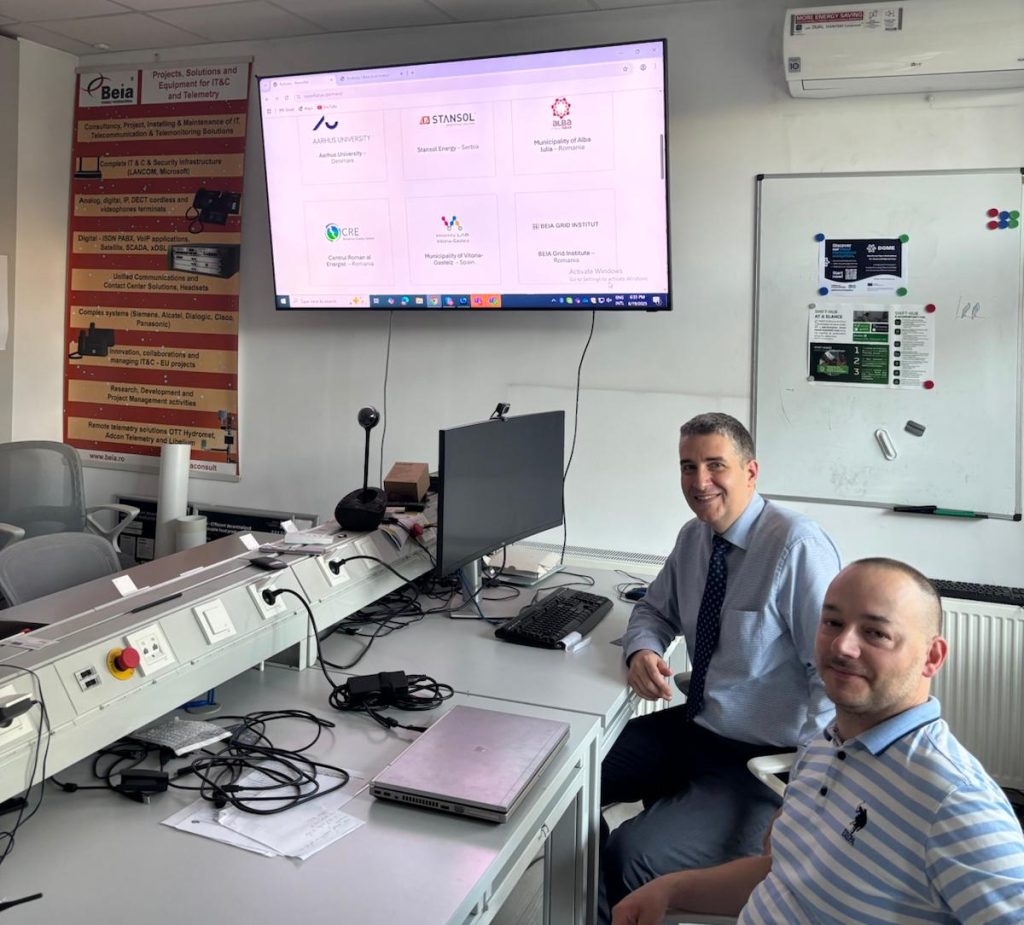
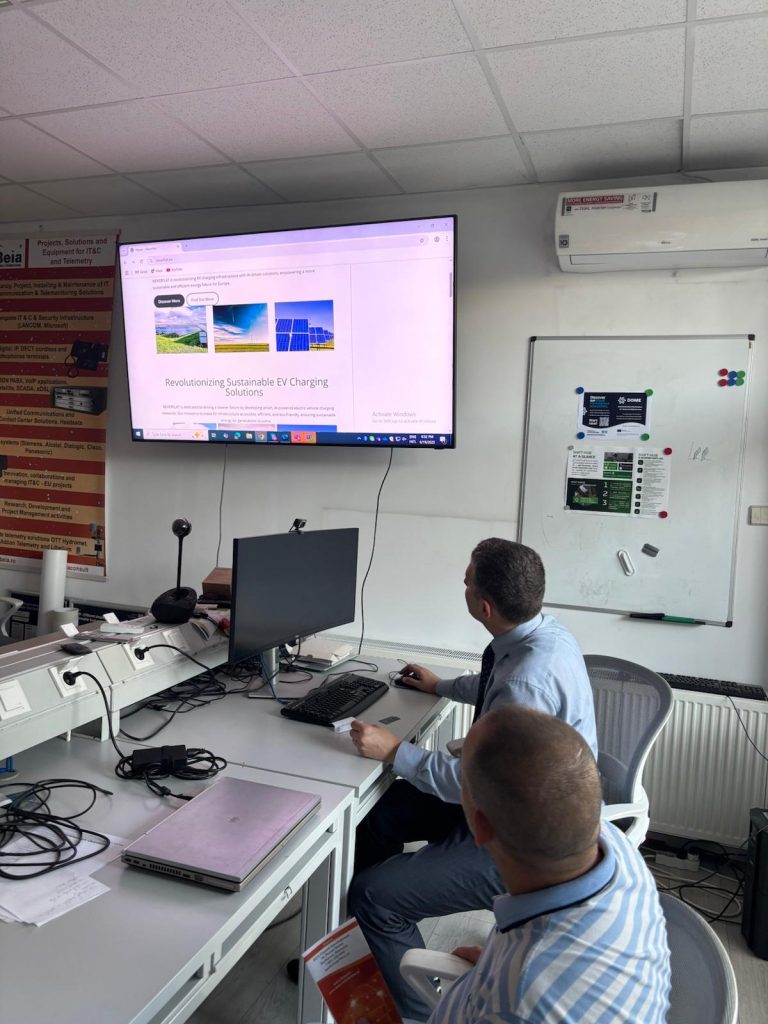
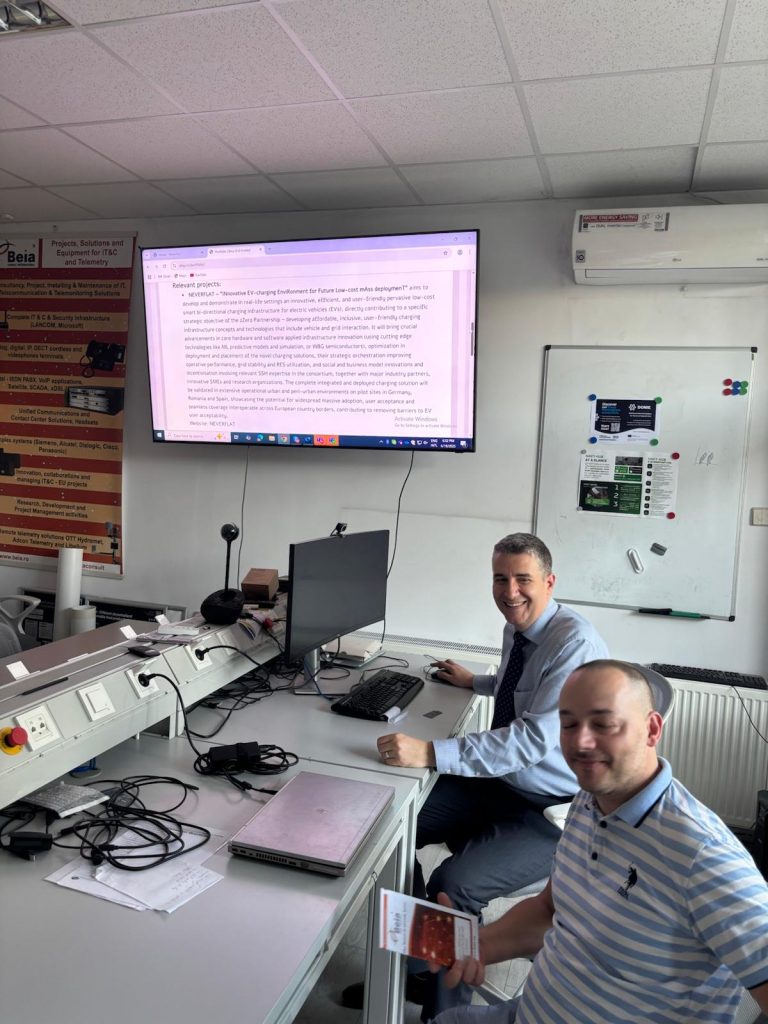
The working visit of the partner Municipality of Alba Iulia to the BEIA GRID Institute headquarters represented an important moment in advancing the activities of the NEVERFLAT project, especially in the context of the Romanian pilot.
The visit took place as part of the activities of Work Package 1 (WP1 – System Requirements and Architecture), Work Package 2 (WP2 – Requirements & Use Cases) and Work Package 6 (WP6 – Dissemination and Communication), as well as other activities relevant for the implementation of technical solutions in Romania.
The main purpose of the meeting was to align the vision and planning for the pilot demonstration of EV charging infrastructure in Alba Iulia, an essential part of the NEVERFLAT project, as well as to coordinate on the deliverables of T1.2, T1.3 and future contributions in WP4. The discussions also included the planning of the dissemination and communication activities within WP6, to ensure a coherent and effective promotion of the pilot results.
Key discussions held during the meeting
1. Defining Local Use Cases (for Romania):
- Identifying real scenarios for using the charging infrastructure in Alba Iulia.
- Adapting the technology to the Romanian urban and peri-urban context.
2. Possible examples:
- Smart charging in public and residential parking lots.
- Integration with local renewable energy networks and existing infrastructure.
- Involving citizens in testing the developed applications (e.g. mobile applications for locating stations, functional feedback).
BEIA Use Case:
BEIA presented an integrated scenario in which its own technical infrastructure (charging stations, photovoltaic panels, BESS storage system and blockchain components) will be used to validate the technologies developed within the project.
The use case has the role of a demonstration laboratory, with a focus on integrating renewable energy into the network, testing V2G/V2L functionalities and energy tokenization.
This use case serves both as a controlled testing environment and as a support for the replication and scaling of technologies in the urban environment (Alba Iulia), providing valuable data for technical deliverables and experimental validations.
1. Task T1.2 – Functional and Non-Functional Requirements & Inclusive Use-Case Scenarios Co-Design.
2. Task T1.3 – System Architecture Design.
3. Deliverables and Immediate Deadlines:
- Collection of functional and non-functional requirements from the local partner.
- Alignment of use cases with the needs of the city and the actors involved (administration, citizens, local operators).
- Integration of the social and digital inclusion dimension in the proposed solutions.
- Discussions on the modular architecture of the system (EV stations, renewable sources, mobile applications).
- Identification of local integration points and equipment already available at BEIA (e.g. photovoltaic panels, storage, bi-directional charging).
- Planning BEIA’s contribution in the design of the software architecture and interoperability with the global platform.
4. Establishing the deliverables for the next period:
- T1.2 – report on requirements and usage scenarios.
- T1.3 – system architecture outline for the Romanian pilot.
- T4.3 – mobile application prototype and user interface.
- Planning the concrete steps for installing test equipment and collecting real data.
- Preparing joint reports and harmonizing the contributions of the two organizations in the WP1 and WP2 deliverables.
Impact of the Visit
- Strengthened coordination between local actors (public and technical).
- Clarified responsibilities and accelerated the preparation for the physical implementation of the charging infrastructure.
- Enabled better planning of deliverables with short deadlines, ensuring compliance with the project calendar.
- It strengthened the collaborative dimension of the project and created the premises for a functional pilot, adapted to the local needs of Alba Iulia.
- It provided context for outlining the external communication directions in WP6, contributing to the preparation of dissemination actions related to the pilot.